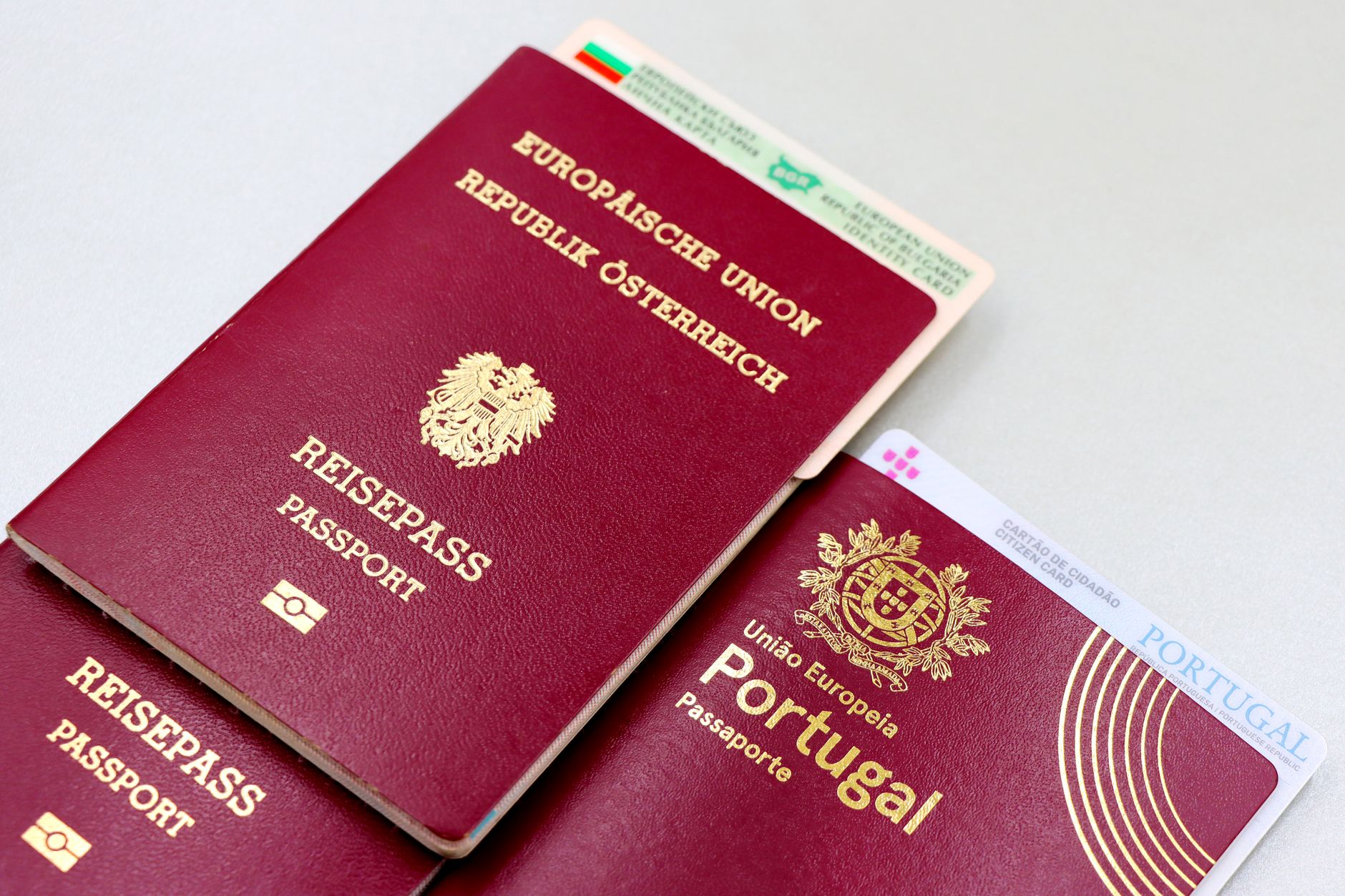
If you're building a startup from outside the US but want a Delaware company, a USD bank account and access to US customers, banking is usually the step where the plan stalls. Most big US banks want you to walk into a branch with a Social Security number. You don't have one, and you're not flying to New York to open a checking account. The good news: a handful of providers were built specifically for this problem, and once you understand what they actually check, the process takes days, not months.
This is a practical walkthrough for non-resident founders, written after comparing the current eligibility rules of five providers founders use most: Mercury, Relay, Wise Business, Brex and Rho. It assumes you're incorporating or have incorporated a US company and now need a place to put the money.
Get the entity right before you touch a bank
Every one of these providers opens accounts in a company's legal name, not a person's. That means the sequence is fixed: incorporate first, bank second. If you haven't formed a company yet, Stripe Atlas is the fastest path for a non-resident — it forms a Delaware C-corp or LLC for a one-time $500, issues your EIN, and has been used by founders in 175+ countries who never set foot in the US. Walk through the full sequence at /steps/incorporate-your-startup before you apply anywhere below; a bank will ask for your incorporation documents and EIN letter on day one, and a rejected application because of missing paperwork costs you a week waiting to reapply.
Once you have a Delaware or other US entity, every bank on this list will also want: the names and ownership percentage of everyone who owns 25% or more of the company, a government ID for each of those owners, and some proof of a US business purpose (a website, a signed customer contract, or at minimum a clear description of what you sell and to whom). Have all of that ready in one folder before you start an application — it's the single biggest reason non-resident applications get delayed.
No, you don't need a visa or an ITIN to open the account
This is the misconception that stops most non-resident founders before they even apply: you do not need a US visa, a Social Security number or an Individual Taxpayer Identification Number (ITIN) to open a business account at any of the providers below. What you need is a formed US company, an EIN for that company (which the IRS issues to foreign owners without an SSN through a specific application process), and valid government ID — a passport is normally enough — for every person who owns 25% or more of the business. An ITIN only becomes relevant later, for your personal US tax filings if you draw a salary or have other US-source personal income, not for getting the account open.
The providers that actually take non-resident founders
Not every "startup bank" accepts founders who live abroad. Several require a US Social Security number for at least one signer. The five below explicitly don't.
Provider
Monthly fee
Non-resident founders
Currencies
Best for
Mercury
$0 base plan
Accepted from most countries (some countries excluded)
USD
Default choice for most VC-track and bootstrapped US entities
Relay
$0, no monthly fee
Owners from 200+ countries
USD
Teams that want up to 20 sub-accounts for budgeting
Wise Business
$0 (per-transaction fees)
Registered businesses in Wise-supported countries, including the US
40+ currencies
Founders who bill or pay suppliers outside the US regularly
Brex
$0 on Essentials
US entity required; non-resident owners accepted if the company meets Brex's cash or revenue bar
USD
Funded startups that want corporate cards and spend controls from day one
Rho
$0 subscription
US-incorporated entity with either a US operating address or a US-based owner with an SSN
USD
Startups that already have at least one US-based co-founder or employee
A few things the table doesn't show, and that matter more than the fee:
Mercury is usually the first stop because its onboarding flow is built around exactly this case — a US-registered company with founders abroad — and it explicitly excludes only a short list of prohibited countries rather than requiring a US-based owner. Relay accepts owners from the widest range of countries on this list (over 200) and gives you up to 20 free checking sub-accounts, which is useful if you want to separate runway, payroll and taxes without opening separate accounts elsewhere. Wise Business is the right add-on, not necessarily your main account, if you're paying contractors or collecting revenue in currencies other than USD — its multi-currency balances avoid the conversion fees you'd eat moving money through a USD-only account twice. Rho, by contrast, is a poor fit if every founder lives outside the US; it specifically wants a US operating address or a US-based owner with a Social Security number, so it suits startups with at least one domestic co-founder rather than a fully remote founding team. Brex sits in between: non-resident ownership is fine, but the account is gated by cash in the bank or revenue rather than residency, so it tends to come later, once you've raised or you're generating meaningful revenue.
Deposit protection and the one mistake that sinks non-resident founders
None of these fintechs are banks themselves. Mercury, Relay, Brex and Rho all route deposits through partner banks that hold FDIC insurance, and FDIC coverage protects deposits up to the standard limit per depositor, per bank, per ownership category — not per fintech. If your fintech spreads your cash across several partner banks (some do this automatically above a threshold), your effective coverage can be higher than the limit at a single bank; if it doesn't, you're exposed above that limit at one institution. Read the specific disclosure each provider publishes about which bank actually holds your money and how it's insured, and don't assume two different-looking apps mean two different banks underneath.
This is not a hypothetical. The 2023 Silicon Valley Bank failure caught startups that had parked an entire seed round in one account at one bank, and non-resident founders who are already juggling entity formation, visas and a new market are exactly the people most likely to miss this detail because they are focused on simply getting an account open at all. Treat "get approved" and "get protected" as two separate steps.
A five-step plan that actually works
Form the entity and get your EIN first. A Delaware C-corp via a formation service or law firm, with the EIN letter from the IRS in hand. See /steps/incorporate-your-startup.
Apply to Mercury or Relay first, since both explicitly support non-resident ownership without requiring a US-based signer. Submit your incorporation documents, EIN letter, and ID for every 25%+ owner in the same session — partial applications are the main cause of multi-week delays.
Add Wise Business if you bill internationally. Keep it as a secondary account for currency conversion rather than your primary operating account, since US-based payment processors and payroll providers generally expect a USD account in the mix.
Deposit founder capital and record it properly. Whatever the founders are investing for their shares should land in the new account and be documented as paid-in capital, not sent through a personal account first.
Check your deposit coverage once the balance matters. After a raise or a large customer payment pushes your balance past the standard FDIC per-bank limit, ask your provider directly how your funds are insured and whether spreading across partner banks is available.
Common mistakes specific to non-resident founders
Using a personal account in a founder's home country "until things are set up." US payment processors, payroll providers and most startup credit programs require a US business bank account before they'll even start your application, so this delays everything downstream, not just banking.
Applying to a bank that requires a US-based owner without checking first. Rho's own eligibility rules name this requirement explicitly; applying anyway just wastes a review cycle.
Skipping the beneficial-ownership documentation. Every provider above runs the same underlying "know your business" check that US banking regulation requires. Missing ID for even one 25%+ owner stalls the whole application, not just that owner's section.
Assuming a sign-up bonus matters more than access. A $100 bonus is irrelevant if the provider later can't support your card volume, your payroll integration, or your multi-currency billing. Pick for the next two years, not the first week.
Where this fits in your build path
Banking sits right after incorporation and just before you start taking real payments. If you haven't incorporated yet, go back to /steps/incorporate-your-startup; once your account is open, the next step is /steps/open-a-business-bank-account for the controls and bookkeeping checklist, and then /steps/take-payments to connect a payment processor to the account you just opened. Compare every current startup bank side by side at /best/banking, browse incorporation services at /best/incorporation, and see the full six-stage route from idea to income at /path. Bootstrapped, self-funded founders in particular should check /for/bootstrapped for the no-fee options that don't assume you've raised anything yet, and the full list of current startup perks, including banking sign-up offers, is at /perks.
Once money is moving through the business, the real work becomes pricing it correctly and collecting it reliably — Monetizes compares the monetization models and the platforms that support each one, from subscriptions to usage-based billing, which is the natural next question once your account can actually receive revenue.
The takeaway: non-resident founders have real, working options today — Mercury and Relay in particular were built for exactly this situation — but the account only works if the entity, the ownership documentation and the deposit protection are all handled in the right order. Get the paperwork complete before you apply, not after a rejection.